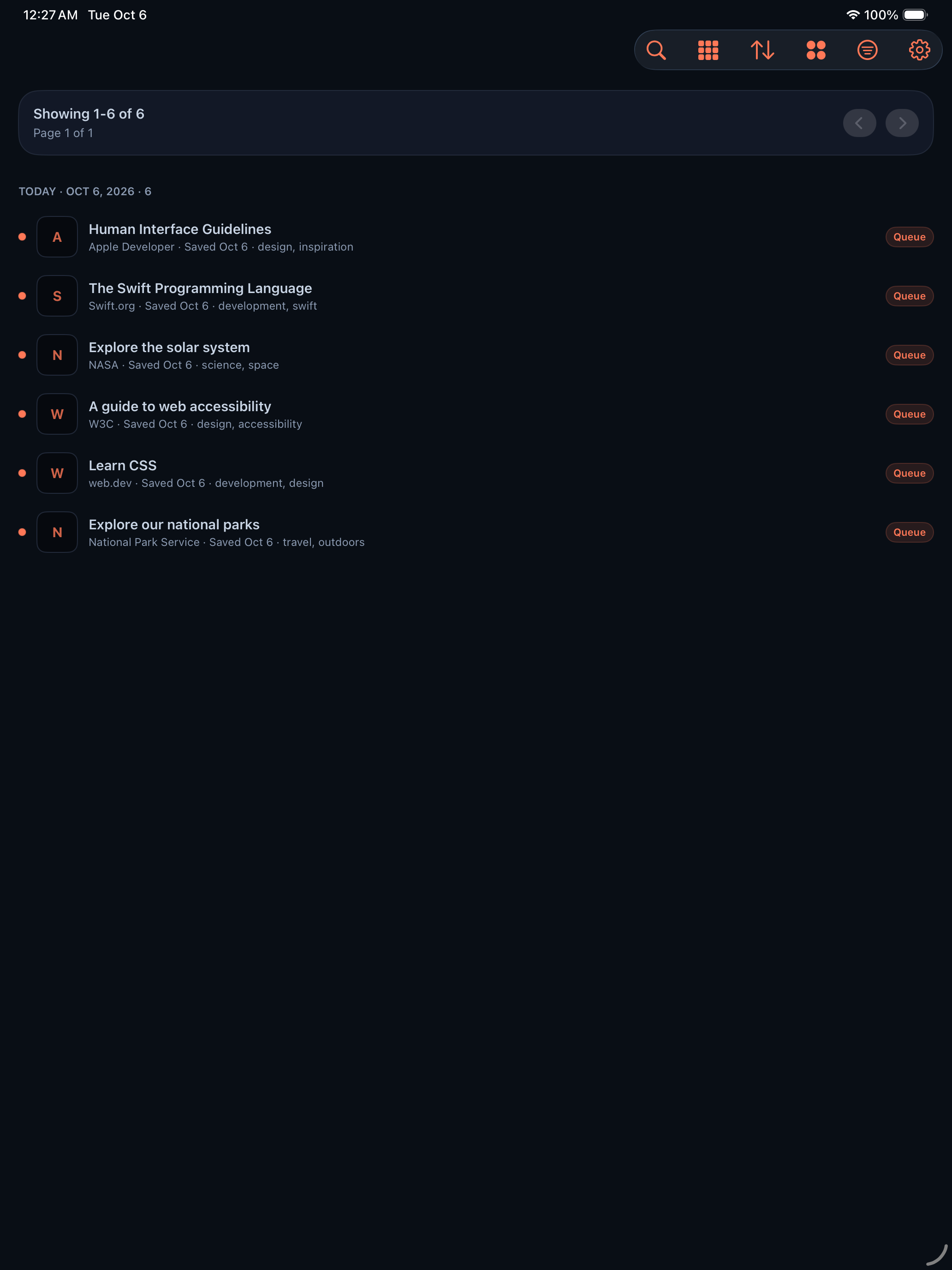
Private digest previews now use prepared summaries instead of last-minute generation
The biggest change in this deploy is simple: the private editorial reading digest now prepares its editorial summaries before the morning send window, then uses those prepared results in preview and delivery.
If you're testing the private digest beta, that changes the feel of the workflow. Preview is no longer a moment where the system tries to generate fresh copy at the last second. Send is no longer coupled to an implicit model call either. Both now read from successful cached editorial summaries.
That matters because a morning digest should feel ready before it arrives.
What changed
For beta accounts in the private digest workflow, preparation now starts at 04:30 account-local time for the 05:00 local delivery window.
During that preparation pass, CodeSplash Bookmarks builds and stores cached editorial summaries ahead of time. Those prepared digest results are then reused in:
- private digest previews n- delivered digests
This release also persists preparation progress, so unfinished work can recover before send time instead of starting over.
What this looks like in practice
If you save a handful of sources the day before, the digest pipeline now has time to prepare the next morning's entries before delivery. When you preview the digest, it uses the cached result for each successful entry. When the digest sends, it uses that same prepared material.
The result is a steadier workflow for the private digest beta:
- preparation happens earlier
- preview and send use prepared copy
- interrupted jobs can resume before the send window
- duplicate editorial generation is reduced
This is a service-side reliability change, but it shows up in a user-facing way: the digest is working from prepared material instead of trying to assemble everything on demand.
Richer digest entries
This deploy also expands what a digest bookmark can carry.
Digest entries can now include:
- validated images
- author information
- reading time
- saved HTML-backed source content
- attached editorial copy
That gives the private editorial reading digest more room to present a saved page with useful context. A bookmark is no longer limited to title, URL, and a thin text extract when richer saved data exists.
Image handling is constrained on purpose. The digest now validates supported HTTPS image URLs before including them in an entry.
Better source handling for editorial preparation
A lot of the work here is about using the saved source more carefully.
Editorial preparation now prefers saved main or article HTML. For GitHub sources, it uses README markup where applicable instead of treating repository navigation as the article. Parsing stays constrained to saved content only. It does not execute page scripts or load linked assets during preparation.
That matters because the private digest beta should summarize what you actually saved, not whatever a live page might try to render later.
The fallback behavior is also tighter. When source material is thin, the digest keeps metadata-based copy instead of inventing article analysis. That's a better failure mode for a reading product. If the saved source is limited, the digest stays conservative.
Reliability work behind the scenes
This release adds a few guardrails that make the private digest beta more predictable.
Persisted preparation jobs track progress and completion so completed work is not repeated unnecessarily.
Lease-based protection reduces simultaneous generation of the same source.
Retry backoff helps interrupted or failed preparation recover before the send window.
Cached-summary invalidation makes sure changed saved source text does not keep serving stale editorial copy.
None of that is flashy, but it is the part that keeps a scheduled digest from feeling fragile.
Scope of this release
This is a deploy release focused on the private digest beta. It improves the private editorial reading digest workflow and its supporting API behavior. The release notes are explicit about the scope: this is a service-side update for beta participants, not a general availability change for every Bookmarks user.
That's also why the interesting part here is the workflow itself:
- Save sources during the day.
- Let digest preparation start before the morning window.
- Preview prepared digest results.
- Deliver the digest from cached successful entries.
For people evaluating digest quality, reliability, and source coverage, this is a meaningful patch.
Why I shipped it this way
A reading digest works better when preparation is separated from delivery.
Generating editorial copy at preview or send time makes those flows do too much at once. Preparing earlier gives the system time to cache results, resume interrupted work, and keep preview/send behavior narrow.
It also makes the output easier to reason about. If a source has enough saved content, the digest can prepare fuller editorial copy with images, author data, and reading time. If it doesn't, the fallback stays grounded in metadata.
That is a better fit for CodeSplash Bookmarks than pretending every saved page has enough material for a strong summary.
You can find CodeSplash Bookmarks here: https://codesplash.ai/downloads
If you're in the private digest beta, try the next morning digest and reply with feedback.
Feature screenshots
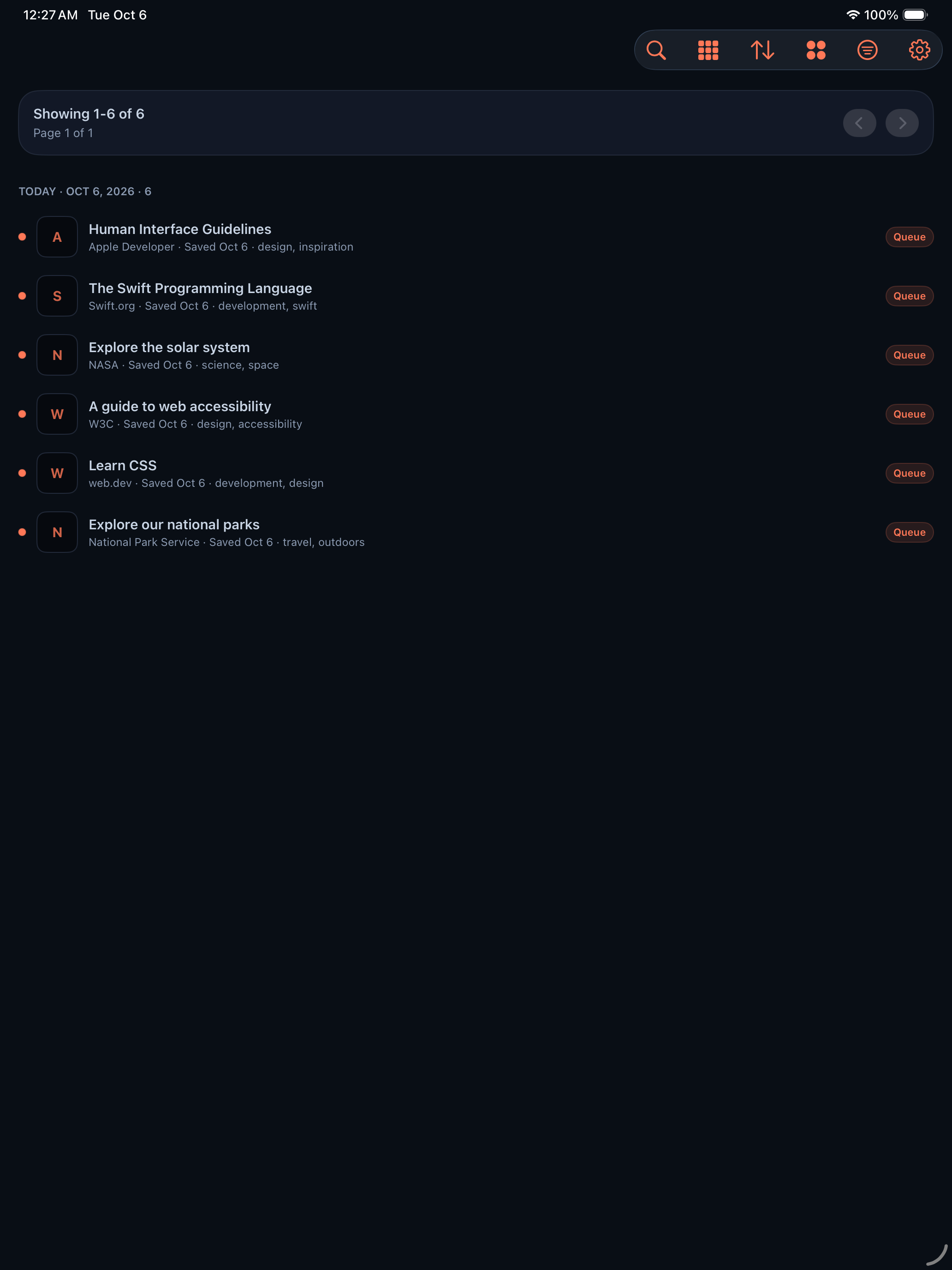
CodeSplash Bookmarks: reading queue, tags and collections: feature reading queue on iPad · View original full-resolution image
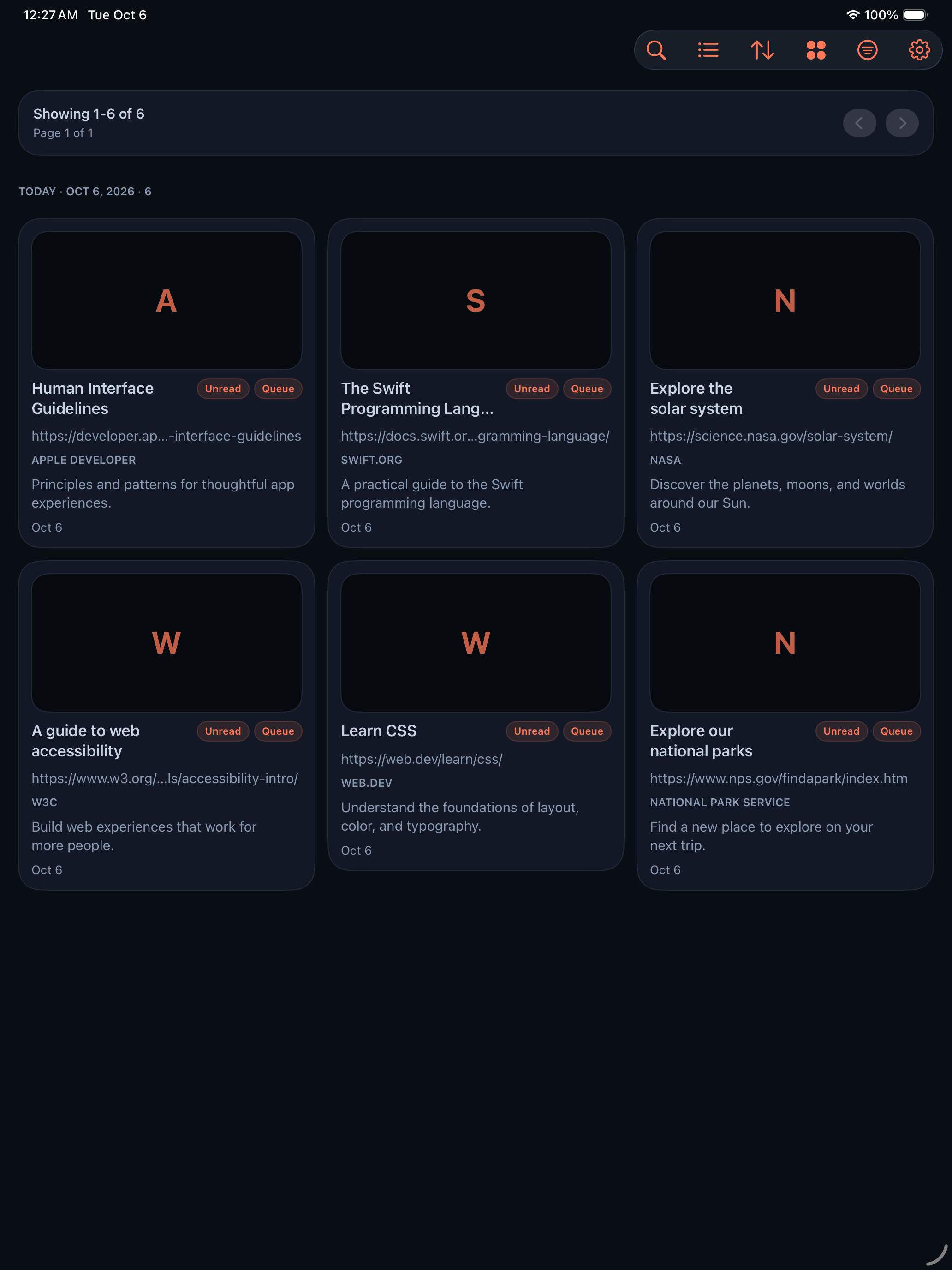
CodeSplash Bookmarks: reading queue, tags and collections: feature cards on iPad · View original full-resolution image