Daily digest hooks now give a clearer reason to reopen a link
This release is a small one, but it fixes a real annoyance in the private daily digest beta.
If you use the morning reading digest to decide what to open first, some link subheadings could feel too samey. They leaned on audience-first phrasing like "Useful if" or "Useful for" instead of telling you what was actually interesting about that saved source. In this update, CodeSplash Bookmarks pushes those reading hooks toward the source itself: a concrete insight, a tension, a practical outcome, or an unanswered question.
That matters because the digest is a triage tool. When you scan a morning email full of saved links, you need a fast reason to reopen one bookmark before another. Broad descriptions of who an article is for do not help much. A specific angle does.
What changed
The main improvement is in the per-link reading hook inside the private daily digest.
Those hooks are now guided to:
- lead with substance from the saved source
- add a distinct angle beyond the title and overview
- avoid generic template phrasing
- give you a clearer reason to click back into a bookmark
So instead of a digest full of lines that all sound like they came from the same writing template, each saved link should carry more of its own shape.
The release also explicitly rejects common generic openings, including phrases such as:
- Useful if
- Useful for
- Great for
- Perfect for
- Ideal for
- If you're
- Whether you're
- This article
- broad lead-ins like Discover, Explore, and Learn how
That change is narrow on purpose. The goal was not to redesign the digest. The goal was to make the short line under each saved link more useful at a glance.
Why this is better in practice
A good reading hook should help answer a simple question: why reopen this bookmark now?
For a saved source about background jobs, a better hook points at the actual issue worth your attention, such as retry ownership, crash handling, or the tradeoff between synchronous requests and queued work. That gives you something to evaluate immediately.
A weaker hook just describes the audience. It tells you the article is "for teams" or "for developers," which is usually obvious and rarely enough to change what you open next.
This release pushes the digest toward the first style.
What did not change
This is not a broad new product surface, and it does not change the rest of Bookmarks.
A few things stayed the same:
- The private daily digest is still beta-only and account opt-in.
- This release does not add a new public digest feature for all users.
- Preview and send continue to use successful cached entries only.
- The digest does not generate fresh copy on demand during preview or send.
That last part matters because it keeps digest generation predictable. This release sharpens the editorial rules for the existing flow without changing how the preparation pipeline works.
A quality pass, not a rewrite
There is no new feature list here, and that is fine.
Sometimes the useful release is the one that removes a repeating rough edge. If you have been in the digest beta, you have probably seen the kind of subheading that sounds polished enough but does not help much once you read ten of them in a row. This update is aimed directly at that problem.
It also keeps the digest grounded in the source. The guidance now pushes each hook to add something beyond the bookmark title and overview, which should make links feel less repetitive across the whole email.
Who should care
This release matters most if you are already in the private morning reading digest beta and use it to sort your reading queue.
If that is you, tomorrow's email should read a little better in a very specific way: the saved links should be easier to triage without opening each one first.
If you are not using the digest beta, the rest of the product surface is unchanged in this deploy.
Try it in your next digest
If you are in the beta, compare the next morning digest with older ones and look for two things:
- fewer audience-first openers
- more hooks that point to a concrete detail worth reopening
That is the whole release story here. A tighter editorial constraint, applied where it affects daily scanning and link triage.
You can find CodeSplash Bookmarks here: https://codesplash.ai/downloads
Try the release in your next digest, or reply with feedback on whether the new reading hooks help you decide what to open faster.
Feature screenshots
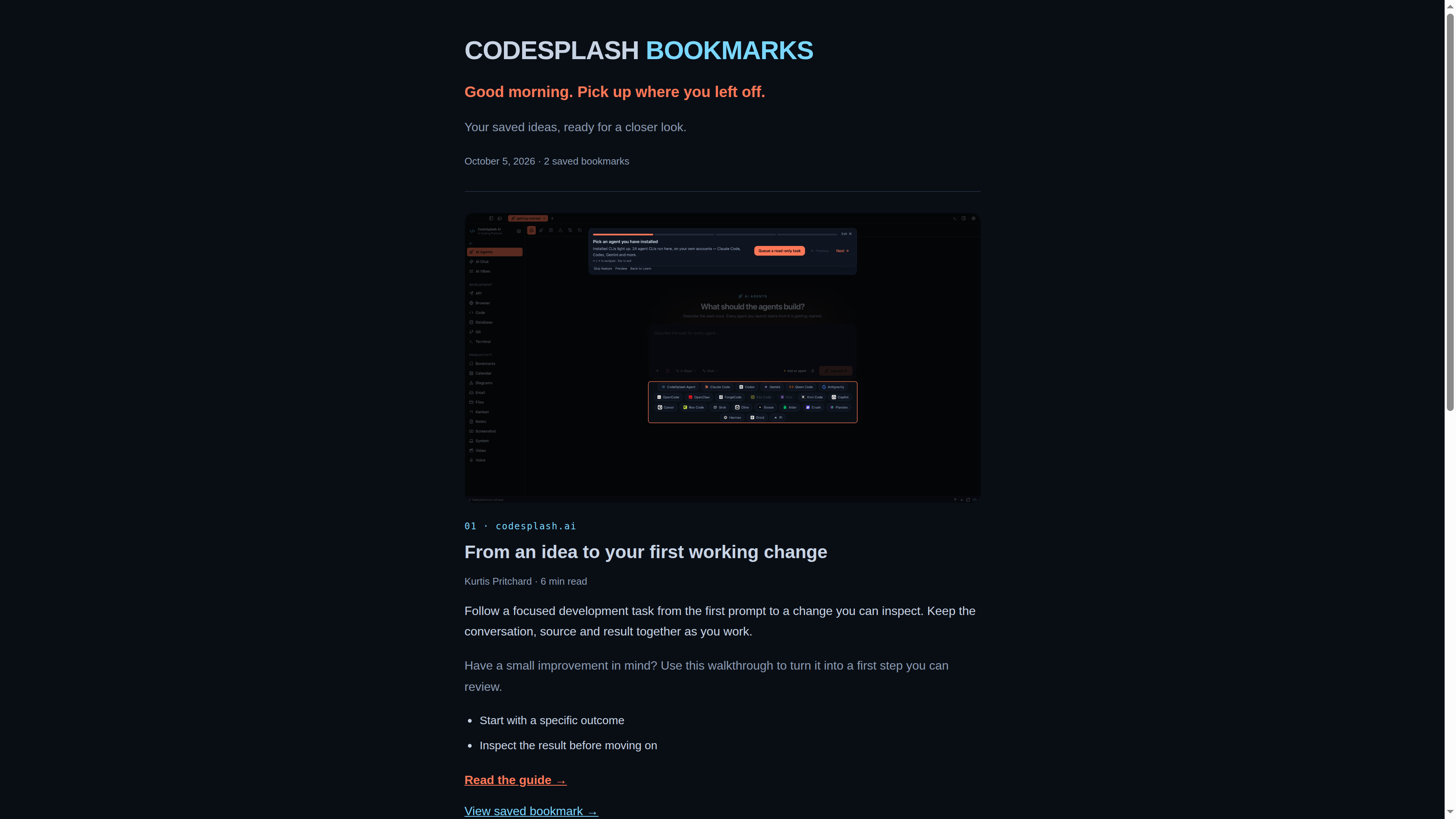
Read your saved articles in the branded morning digest · View original full-resolution image