Surgical teams track a patient across a long arc: the day surgery is proposed, the operation, PACU, the inpatient stay, discharge, and then the ER visits and readmissions that decide whether the outcome was good. CodeSplash Surgery keeps that whole arc in one record, with the forms, patient-reported outcomes, and implants attached where they happened. It is live at surgery.codesplash.ai, and hospitals join through a pilot program.
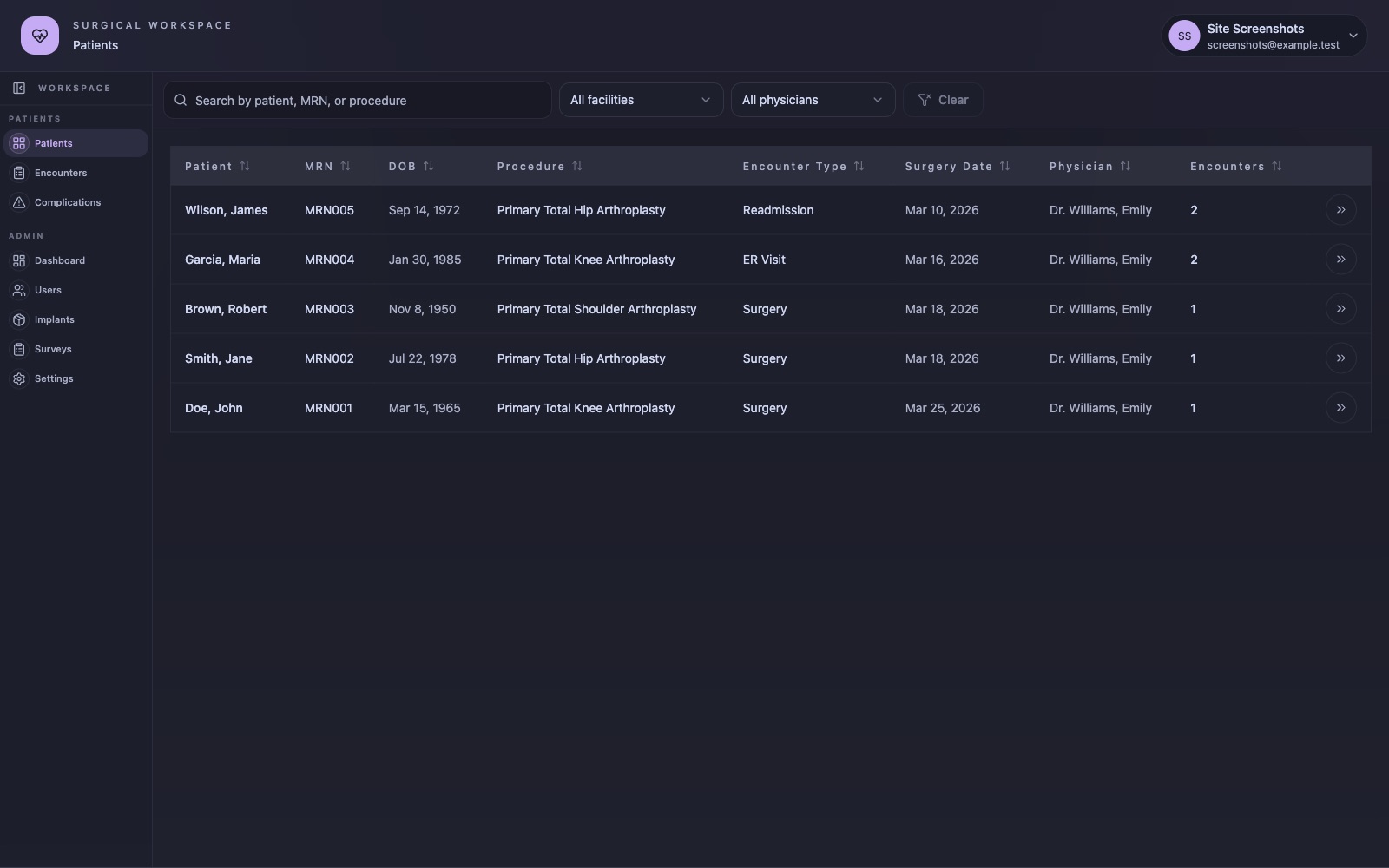
One record per patient, every stage
Patients are listed by hospital unit and by status: Proposed, Surgery, PACU, Inpatient, Outpatient, Discharged, ER Visits, and Readmissions. Search by name, MRN, or procedure, filter by facility and physician, and open a row to reach the encounter workspace.
Each hospital visit is its own encounter. Readmissions and ER visits link back to the surgical anchor, so the story of one operation stays together.
Forms your team designs
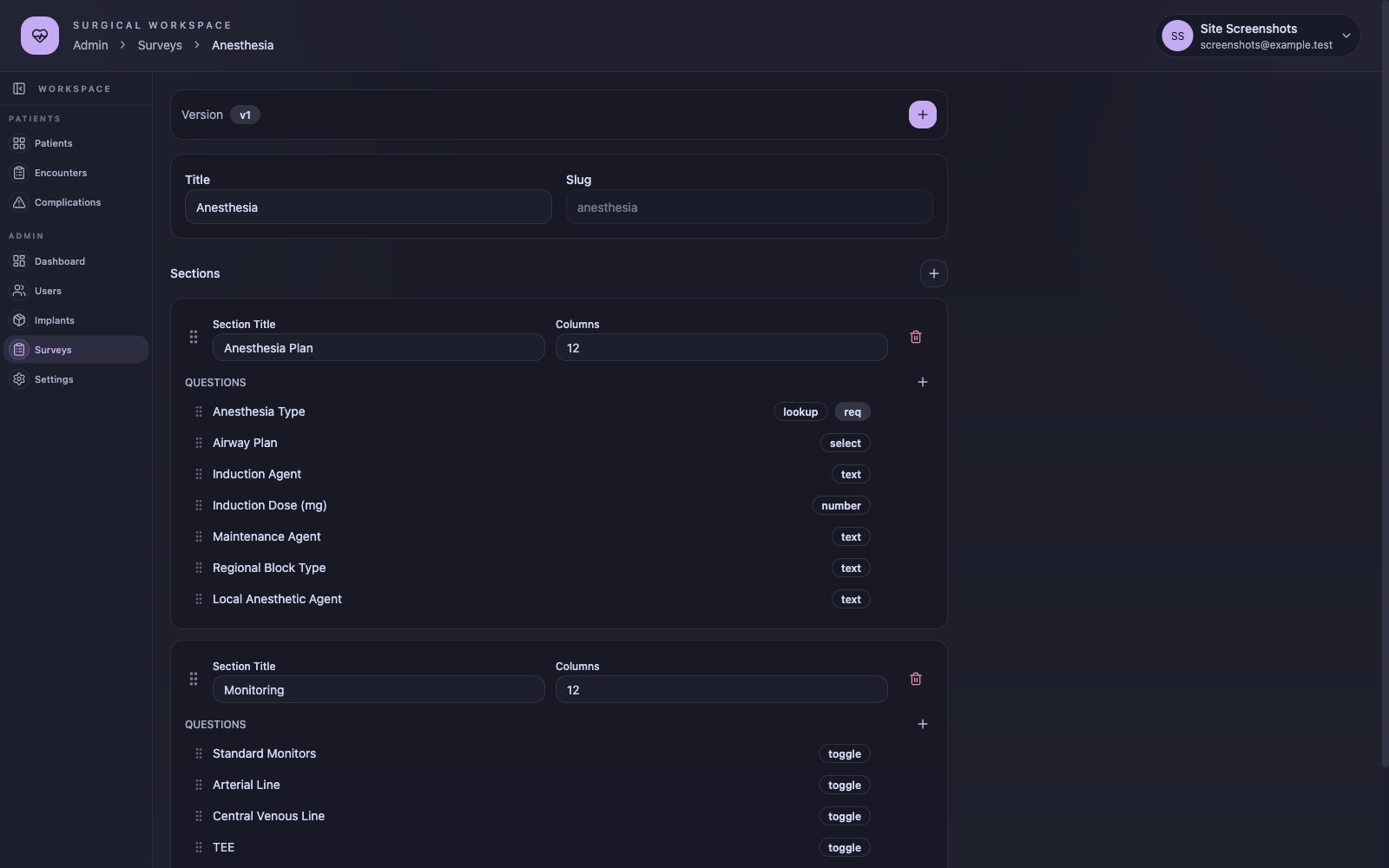
Clinical data lives in forms grouped by phase: preop, intraop, and postop. Rather than hard-code them, the app ships a drag-and-drop form builder with 19 question types, sections with layout columns, required fields, and show or hide rules that depend on other answers. Every saved change is a new version, and earlier responses stay attached to the version they were answered on.
Outcomes on a schedule
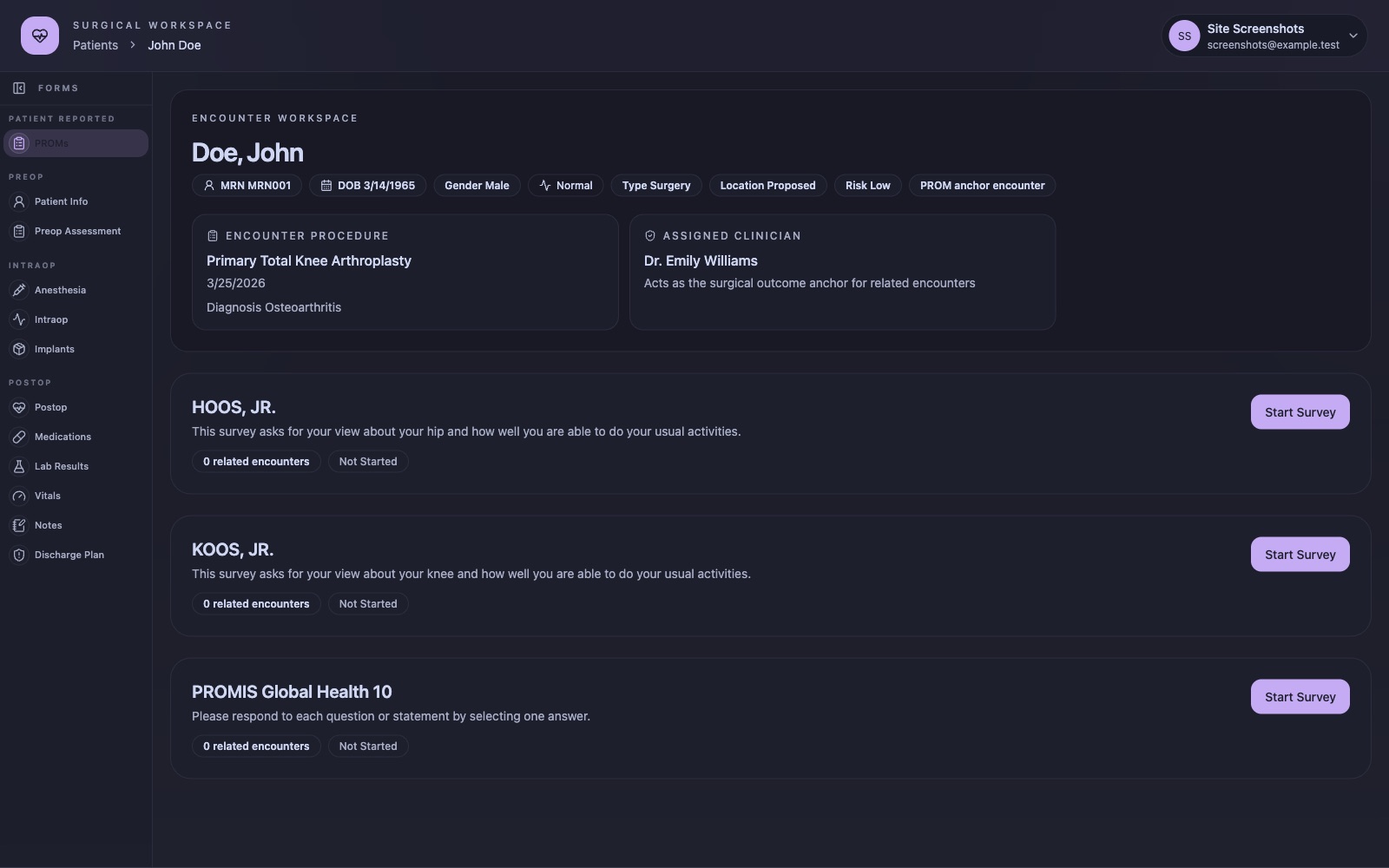
Three patient-reported outcome instruments are built in: HOOS JR. for hips, KOOS JR. for knees, and PROMIS Global Health 10. They are collected at baseline, 6 weeks, 6 months, and 1 year around the anchor encounter, and the flow was designed for a nurse handing an iPad to a patient at the visit.
Implants and risk
Implants are scanned by barcode with the iPad camera. Devices not already in the hospital's catalogue are looked up in the FDA AccessGUDID database, and only the device identifier leaves the system. An external machine-learning service can post complication, readmission, and ER-visit risk for an encounter, and the record shows a badge when a signal arrives. The app does not compute risk itself.
Web for the desk, native iPad for the floor
The web app, built with React, holds patient lists, records, forms, and every admin screen: users, roles, units, forms, lookups, implants, and an activity log. A native SwiftUI app for iPad and iPhone on iOS 18 covers the clinical workflows and barcode scanning. Behind both is a NestJS API on PostgreSQL, deployed on infrastructure the hospital controls. There are no analytics and no language models.
Pilots
Every screenshot in this post shows fictional patients. A hospital pilot starts with sample data, and patient information is entered only after a signed Business Associate Agreement and a security review.
If your surgical team wants to talk about a pilot, email support@codesplash.ai. The product page has the feature list and the guide describes every screen.